
Common Mistakes Beginner Personal Trainers Make (And How to Avoid Them)
Starting a career as a Personal Trainer is exciting, but many beginners make mistakes that slow their professional growth and affect client results. While earning a certification is the first step, becoming a successful trainer requires continuous learning, practical experience, and effective communication.
The good news is that most beginner mistakes are avoidable. By recognizing them early, aspiring Personal Trainers can build confidence, improve client satisfaction, and establish a successful career in the fitness industry.
Let’s look at some of the most common mistakes and how to avoid them.
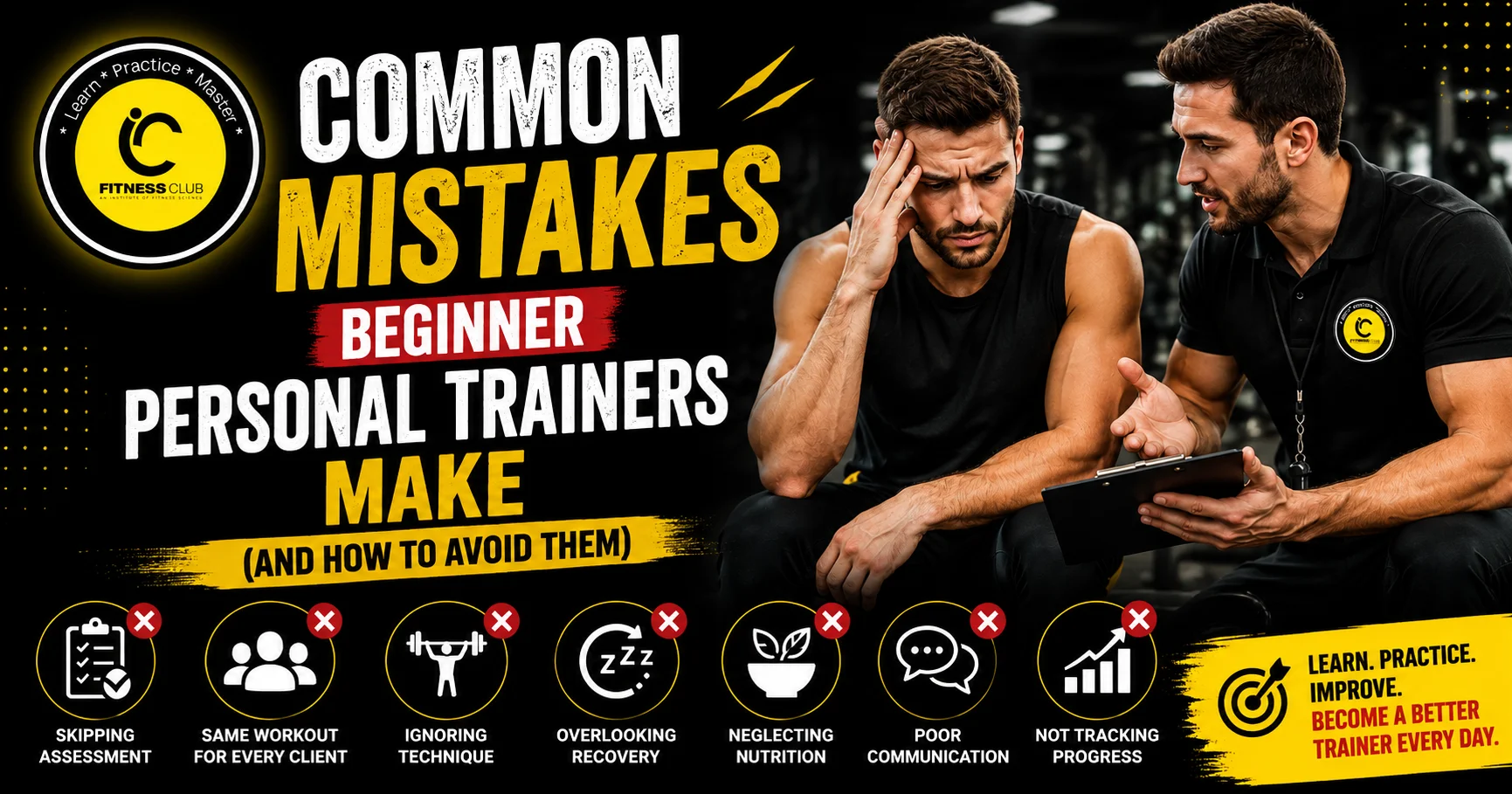
1. Skipping Proper Client Assessment
One of the biggest mistakes beginner Personal Trainers make is starting workout sessions without first assessing their clients.
Every individual has different:
- Fitness levels
- Goals
- Medical history
- Mobility
- Strength
- Lifestyle
Conducting a proper assessment helps create safe and personalized training programs instead of using the same workout for everyone.
Tip: Always begin with a health screening, posture analysis, and fitness assessment before designing a workout plan.
2. Using the Same Workout for Every Client
Every client has unique goals.
A fat-loss client should not follow the same program as someone training for muscle gain or athletic performance.
Effective Personal Trainers design customized workout programs based on individual needs, abilities, and progress.
3. Ignoring Exercise Technique
Many beginners focus on increasing weight rather than improving movement quality.
Poor exercise technique increases the risk of injury and reduces training effectiveness.
Before progressing clients, ensure they master proper exercise form and movement patterns.
4. Overlooking Recovery
Progress doesn’t happen only during workouts—it happens during recovery.
Many new trainers underestimate the importance of:
- Rest
- Sleep
- Hydration
- Nutrition
- Recovery days
Educating clients about recovery helps improve long-term results and reduces the risk of overtraining.
5. Neglecting Nutrition Basics
Exercise and nutrition work together.
While Personal Trainers should work within their professional scope, understanding nutrition fundamentals allows them to guide clients toward healthier eating habits that support their fitness goals.
6. Poor Communication Skills
Technical knowledge alone isn’t enough.
Successful Personal Trainers know how to:
- Explain exercises clearly
- Listen actively
- Motivate clients
- Build trust
- Maintain professionalism
Strong communication improves client satisfaction and long-term retention.
7. Failing to Track Progress
Without progress tracking, it’s difficult to know whether a training program is working.
Regularly monitor:
- Strength improvements
- Body measurements
- Body composition
- Performance
- Client feedback
Tracking progress helps trainers adjust programs and keep clients motivated.
8. Stopping Learning After Certification
The fitness industry continues to evolve.
Research, training methods, and exercise recommendations change over time.
Successful Personal Trainers continue learning through:
- Workshops
- Certifications
- Books
- Research articles
- Practical experience
Continuous education helps trainers remain competitive.
9. Lacking Confidence During Coaching
Many beginners hesitate when coaching clients because they fear making mistakes.
Confidence develops through:
- Practical training
- Repetition
- Observation
- Experience
The more hands-on coaching experience you gain, the more confident you’ll become.
10. Choosing a Course Without Practical Training
One of the biggest career mistakes happens before becoming a trainer.
Some students choose courses that focus only on theory while offering little or no practical experience.
A quality Personal Trainer course should include:
- Practical gym sessions
- Client assessments
- Exercise demonstrations
- Workout programming
- Coaching practice
- Career guidance
Hands-on learning prepares students for real-world coaching and improves job readiness.
How to Avoid These Mistakes
Successful Personal Trainers focus on three key areas:
✅ Scientific Knowledge
Understanding anatomy, exercise science, biomechanics, and nutrition.
✅ Practical Experience
Developing confidence through hands-on gym training and coaching practice.
✅ Continuous Learning
Keeping skills updated through education, workshops, and practical experience.
These habits help trainers deliver better results while building long-term professional success.
Learn the Right Way with IC Fitness Club
At IC Fitness Club – Institute of Fitness Science, our Diploma in Personal Trainer Course is designed to help students avoid these common mistakes by combining scientific education with practical gym training.
Students receive hands-on learning in anatomy, exercise science, client assessment, workout programming, and coaching techniques under experienced faculty.
In addition, students benefit from placement assistance through our network of 50+ gym partners and the Gymploy.com WhatsApp placement community, helping connect certified trainers with career opportunities across the fitness industry.
👉 Explore the Diploma in Personal Trainer Course:
Personal Trainer Course in Delhi | Diploma Program | IC Fitness Club
Frequently Asked Questions
What is the biggest mistake new Personal Trainers make?
One of the most common mistakes is failing to conduct a proper client assessment before creating a workout program.
Why is practical training important for beginner Personal Trainers?
Practical training helps develop coaching confidence, improve exercise technique, and prepare trainers to work safely with real clients.
Can beginner Personal Trainers improve these skills?
Yes. With quality education, hands-on experience, and continuous learning, new trainers can avoid common mistakes and build successful careers.
Final Thoughts
Every Personal Trainer starts as a beginner, and mistakes are part of the learning process. What separates successful trainers is their willingness to learn, improve, and apply evidence-based practices.
By focusing on client assessment, proper exercise technique, communication, continuous education, and practical coaching experience, aspiring Personal Trainers can build rewarding careers while helping clients achieve their fitness goals safely and effectively.